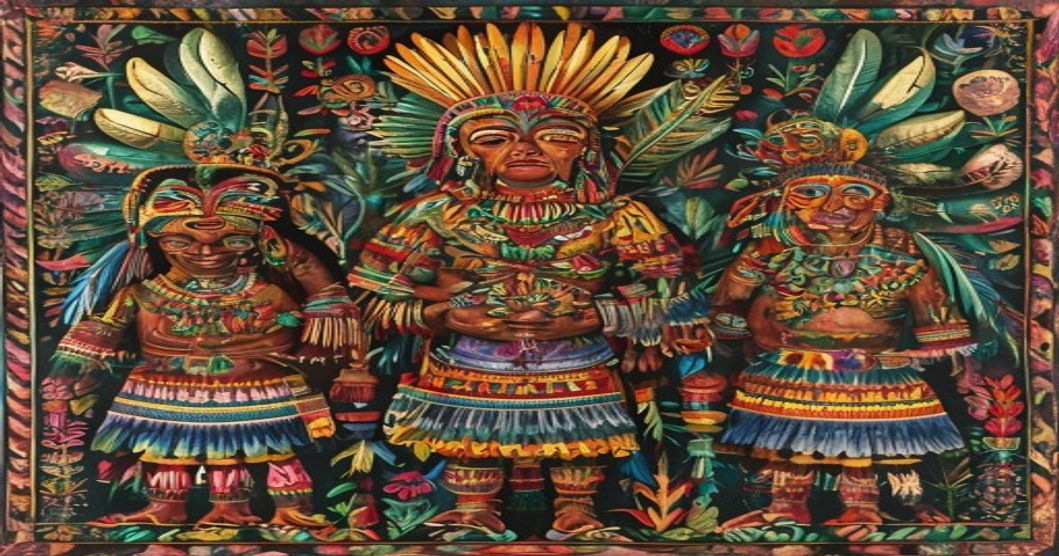
American Bioregion Library

Official American Sub-Bioregion Hero Portals
Sub-Bioregional Portal I

Arctic & Subarctic Bioregion Library

Circumpolar tundra hydrology, sea-ice dynamics, sea-mammal hunting ethics, and the ancestral ecological knowledge of Inuit, Inupiat, and Yupik communities.
Sub-Bioregional Portal II

Boreal Forest Bioregion Library

Taiga woodland ecology, peatland carbon sinks, birch-bark canoe engineering, and the living heritage of Dene, Cree, and Innu peoples.
Sub-Bioregional Portal III

North Atlantic Coastal Bioregion Library

Estuarine fisheries, coastal salt marshes, hardwood agroforestry, and the governance of Haudenosaunee, Mi’kmaq, and Wampanoag nations.
Sub-Bioregional Portal IV

Pacific Coastal–Temperate Rainforest Library

Ancient cedar forestry, wild salmon stewardship, totem carving iconography, and the maritime culture of Haida, Tlingit, Coast Salish, and Nuu-chah-nulth nations.
Sub-Bioregional Portal V

Rocky–Sierra–Cordillera Mountain Library

High-altitude alpine ecology, headwater watershed conservation, cultural fire management, and the mountain traditions of Shoshone, Ute, and Salish communities.
Sub-Bioregional Portal VI

Mesoamerican Bioregion Library

Milpa companion agriculture, volcanic valley terracing, cenote karst hydrology, hieroglyphic writing, and the heritage of Maya, Nahua, Zapotec, and Mixtec peoples.
Sub-Bioregional Portal VII

Caribbean–Island Bioregion Library

Insular tropical marine biology, coral reef protection, hurricane resilience, cassava conuco farming, and Taíno and Kalinago ancestral heritage.
Sub-Bioregional Portal VIII

Northern Andes Bioregion Library

Páramo high-altitude wetland hydrology, cloud forest biodiversity, gold craftsmanship, and the heritage of Chibcha, Muisca, and Nasa communities.
Sub-Bioregional Portal IX

Amazon Basin Bioregion Library

The world’s largest tropical rainforest, riverine floodplain ecology, terra preta soil science, ethnobotanical medicine, and the stewardship of Yanomami, Kayapó, and Asháninka peoples.
Sub-Bioregional Portal X

Orinoco–Guiana Shield Bioregion Library

Tepui tabletop mountain ecosystems, Gran Sabana ecology, blackwater river systems, and the territory of Piaroa, Pemon, and Warao communities.
Sub-Bioregional Portal XI

Andean Highlands & Dry Valleys Library

High-altitude terrace agriculture (andenes), camelid pastoralism, water canal engineering, textile arts, and the knowledge of Quechua and Aymara societies.
Sub-Bioregional Portal XII

Chaco–Pantanal Bioregion Library

The world’s largest tropical wetland system, dry forest fauna, river pulse dynamics, and the knowledge of Guaraní, Nivaclé, and Ayoreo peoples.
Sub-Bioregional Portal XIII

Cerrado–Caatinga Bioregion Library

Central Brazilian savanna biodiversity, semi-arid thorny scrub biomes, water table recharge, and the territory of Xavante, Kraho, and Fulni-ô communities.
Sub-Bioregional Portal XIV

Atlantic Forest Bioregion Library

The biodiverse Mata Atlântica, coastal mountain streams, endemic flora restoration, and the heritage of Tupinambá and Guaraní Mbyá communities.
Sub-Bioregional Portal XV

Pampas–La Plata Bioregion Library

Temperate grassland soil science, Rio de la Plata estuarine hydrology, equestrian traditions, and the memory of Charrua, Het, and Rankülche communities.
Sub-Bioregional Portal XVI

Patagonian–Subantarctic Library

Wind-swept steppe dynamics, Fuegian archipelago canoeing, Valdivian temperate rainforests, and the stewardship of Mapuche, Selk’nam, Yaghan, and Kawésqar peoples.

African Bioregion Library

Official African Sub-Bioregion Hero Portals
Sub-Bioregional Portal I

Sahara & Oasis Desert Bioregion Library

Hyper-arid desert ecosystems, ancient oasis hydrology, subterranean foggaras, caravan routes, and the ecological wisdom of Tuareg and Berber communities.
Sub-Bioregional Portal II

Sahel Semi-Arid Transition Library

Semi-arid savanna belts, transhumance pastoral mobility, Great Green Wall anti-desertification, and customary land tenure of the Fulani and neighbors.
Sub-Bioregional Portal III

North African Mediterranean–Atlas Library

Mediterranean montane biomes, Atlas terraced agriculture, cork oak forests, coastal marine biology, and the heritage of Amazigh (Berber) societies.
Sub-Bioregional Portal IV

West African Savannah–Forest Mosaic Library

Sacred groves, agroforestry mosaics, Niger and Volta river basins, bronze and textile arts, and the worldviews of Yoruba, Dogon, and Akan peoples.
Sub-Bioregional Portal V

Central African Congo Rainforest Library

Earth’s second largest tropical rainforest, Congo Basin hydrology, canopy biodiversity, carbon science, and the forest knowledge of BaAka and Mbuti communities.
Sub-Bioregional Portal VI

East African Rift Valley–Highlands Library

The volcanic Great Rift Valley, montane forests, wildlife corridors, pastoralist cattle traditions, and the continuity of Maasai, Kikuyu, and Oromo societies.
Sub-Bioregional Portal VII

Horn of Africa Drylands & Highlands Library

The Ethiopian Massif, Simien biodiversity, endemic flora, frankincense dryland forestry, terraced agriculture, and the cultural archives of the Horn.
Sub-Bioregional Portal VIII

Southern African Savanna–Karoo–Cape Library

The Cape Floristic Region hotspot, fynbos botany, Namib and Kalahari adaptations, and the rock art and ethnobotany of San and Khoikhoi communities.
Sub-Bioregional Portal IX

African Great Lakes Basin Library

Lake Victoria, Tanganyika, and Malawi ecosystems, lacustrine fisheries, cichlid evolutionary science, and the traditions of Great Lakes societies.

Asian Bioregion Library

Official Asian Sub-Bioregion Hero Portals
Sub-Bioregional Portal I

Siberian Boreal & Arctic Tundra Library

Permafrost dynamics, northern taiga ecology, reindeer pastoralism, and the knowledge of Evenki, Nenets, Sakha, and Chukchi communities across subarctic Eurasia.
Sub-Bioregional Portal II

Central Asian Steppe & Desert Library

Vast grassland steppes, Gobi desert adaptations, nomadic horse culture, Silk Road oases, and pasture governance of Kazakh, Kyrgyz, and Mongolian herdsmen.
Sub-Bioregional Portal III

East Asian Temperate–Monsoon Library

Temperate broadleaf forests, monsoon river basins, Satoyama stewardship, rice-paddy agroecology, and the heritage of Ainu, Han, and Korean communities.
Sub-Bioregional Portal IV

Himalayan–Tibetan Highlands Library

The Tibetan Plateau (“Third Pole”), glacier hydrology, yak pastoralism, sacred mountain geography, and the science of Tibetan, Sherpa, and Ladakhi societies.
Sub-Bioregional Portal V

South Asian Monsoon Plains & Rivers Library

The Indus, Ganges, and Brahmaputra floodplains, monsoon agriculture, Sundarbans mangrove ecology, and the water-harvesting systems of South Asia.
Sub-Bioregional Portal VI

Southeast Asian Tropical Archipelago Library

Wallacea and Sundaland hotspots, equatorial canopy science, maritime voyaging, and the forest stewardship of Orang Asli, Dayak, Hmong, and Ifugao communities.
Sub-Bioregional Portal VII

Southwest Asian Arid–Oasis–River Library

The Tigris-Euphrates Fertile Crescent, ancient qanat canal engineering, date-palm oasis polyculture, and Near Eastern riverine agricultural heritage.
Sub-Bioregional Portal VIII

Arabian Peninsula Desert–Oasis Library

Rub’ al Khali hyper-arid ecology, Red Sea and Persian Gulf coral reefs, Bedouin nomadic navigation, and traditional frankincense dryland forestry.

European Bioregion Library

Official European Sub-Bioregion Hero Portals
Sub-Bioregional Portal I

Arctic–Nordic Europe Bioregion Library

Fennoscandian tundra ecosystems, boreal taiga dynamics, Arctic maritime navigation, and the reindeer herding knowledge of the Sámi across Sápmi.
Sub-Bioregional Portal II

Atlantic–Celtic Coast Bioregion Library

Coastal temperate rainforests, estuarine tidal hydrology, island agroforestry, fishing commons, and the oral traditions of Celtic and Atlantic communities.
Sub-Bioregional Portal III

Western European Interior Bioregion Library

Broadleaf deciduous woodland conservation, Rhine, Seine, and Loire river management, hedgerow ecology, and historical landscape architecture.
Sub-Bioregional Portal IV

Mediterranean Europe Bioregion Library

Evergreen sclerophyllous scrublands (maquis and garrigue), terraced olive and vine polyculture, and the wisdom of Basque, Iberian, Italic, and Hellenic cultures.
Sub-Bioregional Portal V

Alpine–Carpathian Mountain Spine Library

High-altitude alpine grasslands, glacial headwater hydrology, transhumance pastoralism, and the knowledge of Alpine and Carpathian mountain societies.
Sub-Bioregional Portal VI

Central European Green Heart Library

Mixed beech and oak forest ecosystems, Danube basin hydrology, traditional silviculture, and community-based watershed management.
Sub-Bioregional Portal VII

Northern Lowland–Baltic Bioregion Library

Coastal dune systems, post-glacial lacustrine wetlands, amber-bearing littoral zones, and the ancestral heritage of Baltic and Finno-Ugric peoples.
Sub-Bioregional Portal VIII

Eastern Forest–Steppe Bioregion Library

Chernozem black-soil science, forest-steppe biomes, Dnieper and Volga corridor protection, and Slavic oral epic and agricultural calendars.
Sub-Bioregional Portal IX

Balkan Mountain–Valley Bioregion Library

Dinaric Alps karst landscapes, subterranean hydrology, endemic Balkan flora, transhumance routes, and Southeastern European ethnobotanical traditions.
Sub-Bioregional Portal X

Black Sea–Caucasus Gateway Library

Caucasus biodiversity hotspots, Colchic temperate rainforests, ancient agrobiodiversity, and the linguistic and ecological heritage of Caucasian peoples.

More Mexican articles:

Pueblo Mogollón: Historia, Cultura y Cosmovisión Indígena

Pueblo Mogollón: Historia, Cultura y Cosmovisión Indígena de México

Español

Introducción

El pueblo Mogollón es un grupo étnico indígena que habitó en el norte de la Sierra Madre de Chihuahua, en el estado de Chihuahua, México. Su cultura es conocida por su rica tradición artística y su conexión con la naturaleza. En este artículo, se presentará una visión general de la historia, la religión, la economía y la cultura del pueblo Mogollón.

Los Mogollón eran un pueblo sedentario que vivía en las regiones más altas de la Sierra Madre, donde se encontraban los valles y las montañas. Su dieta se basaba en la caza de ciervos, patos y otros animales, así como en la recolección de agave, maíz y otros alimentos. La agricultura era importante en su cultura, ya que proporcionaba alimentos y materiales para la fabricación de herramientas y otros artículos.

Desarrollo

Religión y mitología

La religión de los Mogollón se basaba en la adoración de un cosmos que incluía la Luna, el Sol, el Viento y otros elementos naturales. Sus mitos y creencias eran profundamente conectados con la naturaleza y la vida cotidiana. Se cree que tenían una gran conexión con el fuego, que era considerado un elemento sagrado.

Cultura material

Los Mogollón eran expertos en la fabricación de cerámica, que se utilizaba para almacenar alimentos y otros objetos. Sus vasijas y objetos de cerámica eran conocidos por sus intrincadas diseños y formas geométricas. También se cree que tenían habilidades en la talla de piedra y el trabajo con madera.

Artículos

Los Mogollón dejaron un legado artístico importante en su región. Se han encontrado numerosos artefactos en los sitios arqueológicos, como cerámica, textiles y objetos de piedra. Estos artefactos muestran la riqueza y la creatividad de su cultura.

Cronología

Época Eventos destacados
Época Clásica Se cree que los Mogollón vivieron en esta época, aproximadamente del siglo I al siglo X d.C.
Época Postclásica Se cree que los Mogollón vivieron en esta época, aproximadamente del siglo X al siglo XV d.C.

Animales y plantas

Animal/planta Importancia en la cultura mogollón
Agave Se utilizaba para hacer bebedagües, panes y otros alimentos.
Maíz Se utilizaba para hacer panes, tortillas y otros alimentos.
Ciervos Se cazaban para alimentar a la comunidad.
Patos Se cazaban para alimentar a la comunidad.

Conclusiones

En resumen, el pueblo Mogollón fue un grupo étnico indígena que vivió en el norte de la Sierra Madre de Chihuahua, México. Su cultura se caracterizó por su rica tradición artística, su conexión con la naturaleza y su religión basada en la adoración de un cosmos que incluía la Luna, el Sol, el Viento y otros elementos naturales.

English

Introduction

The Mogollón people were an indigenous group that lived in the northern Sierra Madre of Chihuahua, Mexico. Their culture is known for its rich artistic tradition and its connection to nature. In this article, we will present a general overview of the history, religion, economy, and culture of the Mogollón people.

The Mogollón people lived in the higher regions of the Sierra Madre, where they found valleys and mountains. Their diet consisted of hunting deer, turkeys, and other animals, as well as collecting agave, maize, and other food sources. Agriculture was also important in their culture, as it provided food and materials for tool-making and other artifacts.

Development

Religion and mythology

The Mogollón people’s religion was based on the worship of a cosmos that included the Moon, the Sun, the Wind, and other natural elements. Their myths and beliefs were deeply connected to nature and everyday life. They believed that fire was a sacred element.

Cultural material

The Mogollón people were skilled potters, and their ceramics were used to store food and other objects. Their pottery and other objects were known for their intricate designs and geometric shapes. They were also skilled in stone carving and woodworking.

Artifacts

The Mogollón people left a rich artistic legacy in their region. Many artifacts have been found in archaeological sites, such as ceramics, textiles, and stone objects. These artifacts demonstrate the richness and creativity of their culture.

Chronology

Epoch Notable events
Classical epoch It is believed that the Mogollón people lived during this epoch, approximately from the 1st to the 10th century A.D.
Post-classical epoch It is believed that the Mogollón people lived during this epoch, approximately from the 10th to the 15th century A.D.

Animals and plants

Animal/plant Importance in Mogollón culture
Agave It was used to make beaded jewelry, bread, and other food items.
Maize It was used to make bread, tortillas, and other food items.
Deer It was hunted for food for the community.
Turkeys It was hunted for food for the community.

Conclusions

In summary, the Mogollón people were an indigenous group that lived in the northern Sierra Madre of Chihuahua, Mexico. Their culture was characterized by its rich artistic tradition, its connection to nature, and its religion based on the worship of a cosmos that included the Moon, the Sun, the Wind, and other natural elements.

Français

Introduction

Le peuple Mogollon était un groupe indigène qui a vécu dans la Sierra Madre du Nord de Chihuahua, au Mexique. Sa culture est connue pour sa riche tradition artistique et sa connexion avec la nature. Dans cet article, nous présenterons un aperçu général de l’histoire, la religion, l’économie et la culture du peuple Mogollon.

Le peuple Mogollon habitait dans les régions plus élevées de la Sierra Madre, où il trouvait les vallées et les montagnes. Leur alimentation se basait sur la chasse de cervois, d’autruches et d’autres animaux, ainsi que sur la collecte d’agave, de maïs et d’autres sources alimentaires. L’agriculture était également importante dans leur culture, car elle fournissait de la nourriture et des matériaux pour la fabrication d’outils et d’autres objets.

Développement

Religion et mythologie

La religion du peuple Mogollon était basée sur la dévotion à un cosmos qui comprenait la Lune, le Soleil, le Vent et autres éléments naturels. Les mythes et croyances du peuple Mogollon étaient profondément connectés à la nature et à la vie quotidienne. Ils croyaient que le feu était un élément sacré.

Matières culturelles

Le peuple Mogollon était un maître de la poterie, et leurs poteries étaient utilisées pour stocker de la nourriture et d’autres objets. Leurs poteries et d’autres objets étaient connus pour leurs dessins intrincats et leurs formes géométriques. Ils étaient également des maîtres en taille de pierre et en travail de bois.

Artificats

Le peuple Mogollon a laissé un héritage artistique riche dans leur région. Beaucoup d’artificats ont été trouvés dans les sites archéologiques, tels que des poteries, des tissus et des objets de pierre. Ces artefacts démontrent la richesse et la créativité de leur culture.

Chronologie

Époque Événements notables
Époque classique Il est cru que le peuple Mogollon a vécu pendant cette époque, approximativement de 1er au 10e siècle après J.-C.
Époque post-classique Il est cru que le peuple Mogollon a vécu pendant cette époque, approximativement de 10e au 15e siècle après J.-C.

Animaux et plantes

Animal/plante Importance dans la culture mogollon
Agave Il était utilisé pour faire des bijoux ornés, du pain et d’autres aliments.
Maïs Il était utilisé pour faire du pain, des tortillas et d’autres aliments.
Cervois Il était chassé pour la nourriture de la communauté.
Autruches Il était chassé pour la nourriture de la communauté.

Preguntas Frecuentes / FAQ / Questions Fréquentes

Question 1

Quelle est la période exacte de l’existence du peuple Mogollon ?

Réponse : Il est cru que le peuple Mogollon a vécu pendant la période classique, approximativement de 1er au 10e siècle après J.-C., et pendant la période post-classique, approximativement de 10e au 15e siècle après J.-C.

Question 2

Quels étaient les animaux les plus importants pour la nourriture de la communauté mogollon ?

Réponse : Les cervois et les autruches étaient les animaux les plus importants pour la nourriture de la communauté mogollon.

Question 3

Quelle était l’importance de l’agave dans la culture mogollon ?

Réponse : L’agave était utilisée pour faire des bijoux ornés, du pain et d’autres aliments.

Explora Más

Visite l’archive libre et gratuite de Mexican Library (mexicanlibrary.org) pour découvrir plus d’informations sur les cultures indigènes de México, y incluyendo la cultura mogollón. Aprende sobre sus artefactos, sus simbolos y sus tradiciones.

Bibliografía / References / Références

Mexican Library
Privacy Overview

This website uses cookies so that we can provide you with the best user experience possible. Cookie information is stored in your browser and performs functions such as recognising you when you return to our website and helping our team to understand which sections of the website you find most interesting and useful.